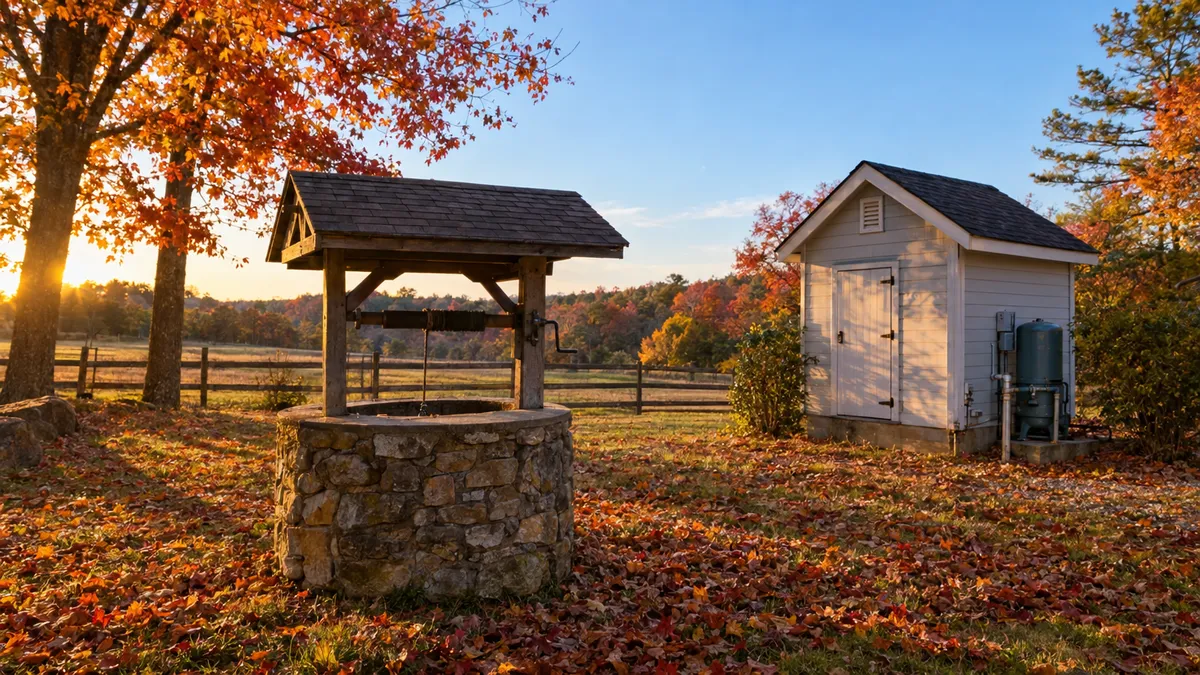
How to Winterize Your Well and Pump System Before the First Freeze in Upstate SC
How to Winterize Your Well and Pump System Before the First Freeze in Upstate SC
Most Upstate homeowners think about winterizing their pipes and gutters. Not many think about their well — until the water stops running at 6 a.m. on a 28-degree morning.
October is the right time to get ahead of that. A little attention now can save you a cold, expensive emergency call in December. Here's what well owners in Greenville, Spartanburg, Pickens, Anderson, and Laurens counties should check before the first hard freeze rolls through.
Why Upstate SC Wells Need Freeze Prep
Upstate South Carolina doesn't get the extended arctic winters of the mountain states, but it gets enough hard freezes — some years dropping into the teens — to cause real damage to exposed well components. The well itself (the borehole drilled down into bedrock) won't freeze; it's deep enough. What can freeze are the above-ground parts: exposed pipes, the pressure tank if it's in an uninsulated pumphouse, pressure switches, and any fittings between the well casing and your house.
When those components freeze, the best case is no water until things thaw. The worst case is a burst pipe or a damaged pump that ran dry trying to pull water through a frozen line.
Prevention is cheap. Repair after the fact is not.
5 Things to Check on Your Well System Before Winter
1. Inspect Your Well Cap and Casing
Walk out to your well head and take a look. The well cap — the cover on top of the casing — should be seated securely with no cracks, gaps, or missing hardware. A loose or cracked cap can let in freezing air, insects, and surface water. If it looks off, call a licensed driller to assess it. Don't try to pry it open yourself.
Also check the casing for any damage at ground level. It should be solid and undamaged where it exits the ground.
2. Insulate Your Pressure Tank and Pumphouse
If your pressure tank lives in an outbuilding, crawl space, or a standalone pumphouse, that space needs to stay above freezing when temperatures drop. Check the insulation in the walls and ceiling. Look for gaps where cold air can sneak in — gaps around pipe penetrations are the usual culprits.
A small, safe heat source (like a low-wattage pipe heating cable or a properly installed space heater with a thermostat) can keep a small pumphouse from freezing. Keep any heat source away from flammable materials and check it now, before you need it, so you're not doing this in a panic the night before a hard freeze.
3. Check the Pressure Tank for Short Cycling
Short cycling is when your pump clicks on and off rapidly — sometimes every few seconds — instead of running in longer, normal intervals. It's almost always a sign that the pressure tank's air bladder has failed or the tank has become waterlogged. A failed tank means your pump is working much harder than it should, which wears it out faster.
If you notice your pump running constantly or cycling rapidly, don't wait until spring to deal with it. A stressed pump heading into winter is one cold snap away from calling it quits entirely. Get it looked at now while it's still a scheduled repair and not a no-water emergency.
4. Know Where Your Well Breaker Is — And That It Works
In a freeze emergency, the first safe step is to turn off the well pump breaker to protect the pump from running dry or fighting a frozen line. Make sure everyone in your household knows which breaker it is in your panel. Label it clearly if it isn't already.
While you're at it, check the breaker itself. If it trips frequently, feels warm, or looks discolored, that's worth a service call before winter. A tripping breaker connected to a well pump can signal anything from a minor electrical issue to a pump that's already struggling.
5. Schedule a Service Call If You Haven't Had One in a While
Well pumps are out of sight, and homeowners often don't think about them until there's a problem. If your pump is more than 10–15 years old and hasn't been serviced recently, a pre-winter check-up is a smart investment. A technician can assess pump performance, check the pressure switch and tank, and catch small problems before they turn into middle-of-January emergencies.
What to Do If You Wake Up with No Water After a Freeze
If a hard freeze has come and gone and you've turned on a faucet to nothing, here's the safe sequence:
- Check the well breaker. Go to your electrical panel and check whether the well pump breaker has tripped. If it has, reset it once. If it trips again immediately — or if you smell burning, hear a buzzing sound, or see discoloration — turn it off and leave it off. Call a professional.
- Don't keep resetting a tripping breaker. A breaker that trips repeatedly is telling you something is wrong. Forcing the pump to run against a frozen line or through a failed component can destroy it.
- Use bottled water for drinking until the issue is diagnosed and the system is cleared.
- Call for service. A no-water call after a freeze is an urgent situation. Don't wait to see if it resolves on its own.
Upstate-Specific Freeze Tips
If you're in Simpsonville, Fountain Inn, Fork Shoals, Greer, Easley, Landrum, or other communities across the Upstate, keep these in mind:
- Watch the overnight lows in November and December. Upstate SC can swing from 60°F to 20°F in the same week. Don't wait for a sustained cold stretch to start thinking about your well.
- Rural properties with longer water lines from the well to the house have more exposed pipe and more potential freeze points. Know your layout.
- If you have outdoor irrigation connected to your well, shut it off and drain the lines before the first freeze. Leaving water in irrigation lines is an easy way to crack a fitting.
- Let a faucet drip overnight during hard freezes — this applies to your household plumbing, not the well itself, but moving water is harder to freeze.
Frequently Asked Questions
Will my well freeze in the winter?
The well itself — the borehole drilled down into bedrock — won't freeze. It's deep enough to stay at a stable temperature year-round. What can freeze are the above-ground components: exposed pipes, fittings, the pressure tank if it's in an unheated space, and the pressure switch. Those are the parts to protect.
How do I know if my pressure tank is the problem?
The clearest sign is short cycling — your pump clicking on and off rapidly, sometimes every few seconds. If you can hear your pump running more than it used to, or if your water pressure fluctuates a lot, the tank may be waterlogged. A service technician can check it quickly.
When should I call a well driller versus an electrician?
If the issue is no water, low pressure, or anything related to pump performance, call a licensed well driller or well pump service company. If the issue is clearly the breaker panel itself — breakers failing, wiring issues separate from the pump — that's an electrician's territory. Often both may be needed. When in doubt, call the well company first; they can tell you where the problem is.
Is it too late to schedule service in October?
October is actually ideal. Most freeze-related service calls happen in December and January when schedules fill up fast. Calling now means you get your choice of appointment times and get ahead of any problems before the cold hits.
Get Your Well Ready Before the Cold Gets Here
Kellett's Well Boring Inc. has been keeping Upstate water running since 1963. We drill new wells, repair and replace well pumps, service pressure tanks, and handle the full range of water well needs across Greenville, Spartanburg, Pickens, Anderson, and Laurens counties.
If your pump is showing warning signs, your pressure tank is short cycling, or you just haven't had anyone look at your system in a few years — now is the time, not January.
Call or text us to schedule a service call, or book online at kellettswellboring.com. We'll make sure your water keeps flowing all winter long.
