7 Signs Your Well Pump Is Failing (And What to Do About It)
7 Signs Your Well Pump Is Failing (And What to Do About It)
Fall is here, and if you own a private well in Upstate South Carolina, right now is exactly the right time to pay attention to how your water system is behaving. Temperatures are dropping. Demand is shifting. And a pump that's been quietly struggling all summer may pick this season to let you know it's done.
The good news: well pumps rarely fail without warning. There are almost always signs in the weeks or months before you turn on the tap and get nothing. Catch them early and you're looking at a repair. Miss them and you may be looking at an emergency call, a pump pulled from the ground, and a house without water for a day or two while parts are sourced.
Here are the seven warning signs Upstate homeowners should know — and what each one usually means.
1. No Water at All
This is the one that gets everyone's attention. You turn on the faucet and nothing comes out. Before you call anyone, do one thing: go check your well's breaker in the electrical panel. Well pumps run on their own dedicated breaker, and a tripped breaker is sometimes all that's going on.
Flip it once. If power comes back and water flows, great — but keep an eye on it. A breaker that keeps tripping is telling you something is wrong with the pump motor, the wiring, or the control box. Don't keep resetting it hoping it will hold. Leave it off and call for service.
If the breaker is fine and you still have no water: that's an urgent service call. A pump that won't start, has lost prime, or has physically failed needs a professional on-site.
2. Low or Weak Water Pressure
Your shower used to feel like a shower. Now it feels like someone is pouring water from a watering can. Low water pressure on a well system can have several causes — a failing pump, a waterlogged pressure tank, a clogged filter, or even a drop in the water table after a dry summer.
The key question is: did it come on gradually, or did it happen suddenly?
- Gradual drop: Often a sign the pump is losing capacity as it wears out. Impellers wear down over years of use, especially in sandy or sediment-heavy water.
- Sudden drop: More likely a pressure tank issue or a problem with the pump's pressure switch.
Either way, don't ignore it. Low pressure that goes untreated can accelerate pump wear.
3. The Pump Runs Constantly (Or Won't Shut Off)
Your well pump is designed to run, build pressure in the tank, and then shut off. It should cycle on and off — not run nonstop. If you can hear the pump running continuously without shutting off, that's a problem.
A pump that won't stop running is working too hard. It may be unable to reach the cutoff pressure because:
- The pump itself is worn and underpowered
- There's a leak somewhere in the line that keeps bleeding pressure off
- The pressure switch is set wrong or has failed
Running constantly shortens pump life significantly. The motor overheats. The bearings wear faster. What might have been a pressure switch replacement becomes a full pump replacement if left alone.
4. Short Cycling — The Pump Clicks On and Off Rapidly
Short cycling is the opposite problem and just as hard on your pump. Instead of running too long, the pump kicks on and off every few seconds — sometimes dozens of times an hour.
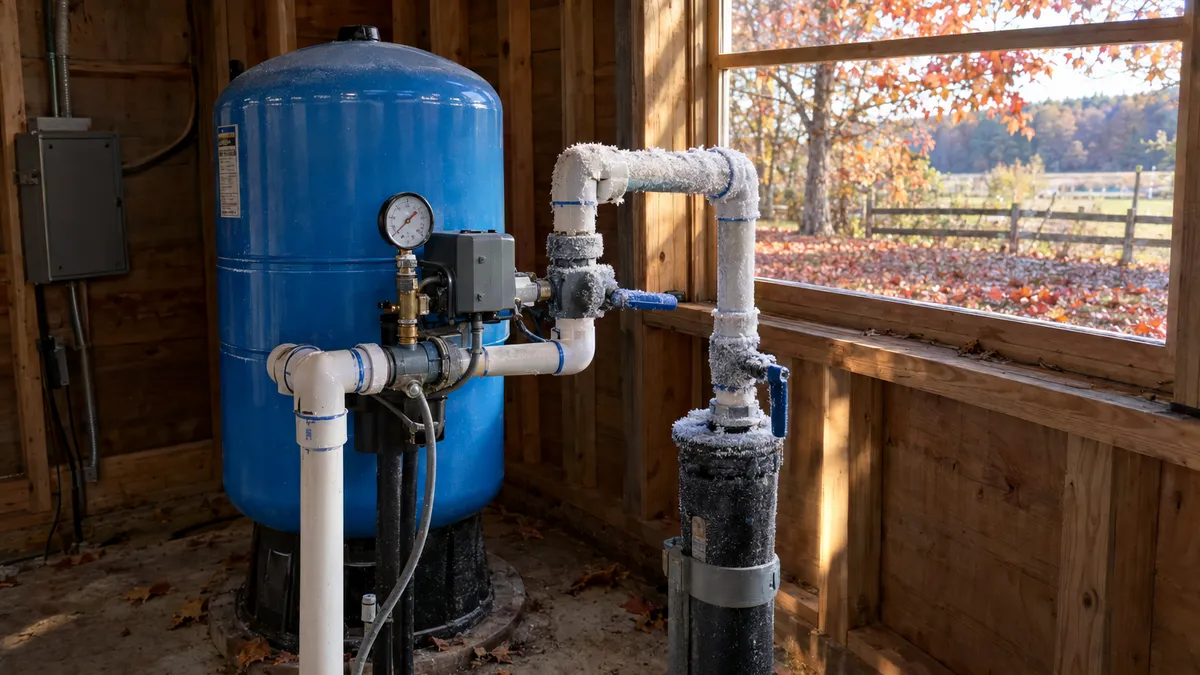
This is almost always a pressure tank problem. Inside your pressure tank is a rubber bladder and an air charge. Over time, the bladder can rupture or the air can escape, and the tank fills completely with water. With no air cushion to hold pressure, the system loses pressure almost immediately after the pump turns off — so the pump fires right back up again.
Short cycling is a high-priority issue. It won't usually leave you without water today, but it burns out pump motors fast. If you notice rapid clicking sounds from your pressure tank area or the pump is cycling very frequently, book a service call within a day or two.
5. Air Sputtering From Your Faucets
Turn on a faucet and hear spitting, gurgling, or air blasting out with the water? That air has to come from somewhere, and in a properly sealed well system, it shouldn't be there.
Air in the lines can mean:
- The water level in the well has dropped below the pump intake (common after a drought)
- The pump is drawing air through a crack or bad fitting
- A check valve has failed, allowing water to fall back between cycles
Occasional sputtering after your well has been worked on is normal — air gets trapped and clears out. But if it's happening regularly on its own, get it checked.
6. Murky, Sandy, or Discolored Water
Clear water is expected from a properly functioning well. If you're suddenly seeing:
- Sandy or gritty water: The pump intake screen may be damaged, or the pump is sitting too close to the bottom of the well and pulling in sediment. It can also mean the well casing has a crack.
- Muddy or cloudy water after a storm: Surface water may be entering the well — a potential health concern that needs immediate attention.
- Brown or orange water: Usually iron, especially common in Upstate SC bedrock wells. Not necessarily a pump problem, but worth testing.
- Rotten egg smell: Sulfur bacteria in the water. Again, a water quality issue rather than a pump failure — but a signal that your system needs inspection and testing.
Any sudden change in your water's color, smell, or taste is a reason to stop drinking it and call for water testing.
7. Higher Electric Bills With No Other Explanation
This one is easy to overlook. A well pump that's struggling — running longer cycles, fighting worn parts, or trying to compensate for a waterlogged tank — uses more electricity. If your power bill has crept up and you haven't changed your habits, added appliances, or run extra loads, it's worth checking whether your pump is the culprit.
This sign often shows up months before anything more obvious goes wrong. It's subtle, but for the observant homeowner, it's a useful early warning.
How Long Do Well Pumps Last?
Most submersible well pumps are designed to last 10–15 years under normal conditions. In Upstate South Carolina, the actual lifespan depends on factors like:
- Water quality — Iron-heavy or sediment-laden water is harder on pump components
- How often the pump cycles — More starts and stops = more wear
- Whether the pressure tank was maintained — A waterlogged tank is one of the leading causes of premature pump failure
- Voltage fluctuations — Power surges and brownouts stress pump motors
If your pump is approaching or past the 10-year mark, it's worth having it checked even if everything seems fine. Proactive inspections are cheaper than emergency replacements.
Repair or Replace? Here's a Practical Rule
Not every problem means a new pump. A failed pressure switch, a bad capacitor, or a waterlogged tank can all be repaired without pulling the pump. But if the pump itself is worn out — and especially if it's 10 years old or more — replacement often makes more sense than patching it.
The honest answer is that it depends on what the tech finds when they diagnose it. A good driller will tell you what's wrong, what it will cost to fix it, and whether replacement makes more financial sense. You should never feel pressured to replace equipment that can reasonably be repaired.
A Note on Fall and Winter in the Upstate
October is a good time to think about this because Upstate South Carolina winters, while mild compared to the mountains, do bring freezing temperatures — sometimes fast. A pump or pressure tank that's struggling in the fall will have a harder time when outdoor temperatures dip into the 20s and 30s. And an emergency pump call on a cold morning is nobody's idea of a good time.
If you've noticed any of the signs above, don't wait until December to act on them.
Frequently Asked Questions
How do I know if my well pump or my pressure tank is the problem?
Short cycling (rapid on-off) almost always points to the pressure tank. Pump running constantly, no water, or very low pressure are more likely pump issues. A technician can usually diagnose this quickly on-site.
My breaker keeps tripping for the well. Is that dangerous?
Yes — a repeatedly tripping well breaker often signals a motor problem, a wiring issue, or a ground fault. Leave the breaker off and call for service. Don't keep resetting it.
Can I use my water while I wait for a repair appointment?
It depends on the issue. For water quality concerns (murky, smelly, or discolored water), use bottled water for drinking until the system is checked. For pressure or cycling issues, limited use is usually fine.
Do wells in Upstate SC need annual maintenance?
At minimum, well owners should test their water once a year and any time they notice a change in taste, smell, or color. A professional inspection every few years — or sooner if you notice any warning signs — helps catch problems before they become emergencies.
How long does a well pump replacement take?
For a typical residential well in the Upstate, pulling and replacing a submersible pump usually takes one day. Scheduling depends on parts availability and how busy the service calendar is.
Ready to Get Your Well Checked Before Winter?
Kellett's Well Boring Inc. has been diagnosing and repairing well pumps across Upstate South Carolina for decades. We're a family-owned operation based in Simpsonville — not a franchise, not a call center. When you call us, you get a local driller who knows Upstate soil, bedrock, and water.
If you're seeing any of the warning signs above — or if you just want a professional set of eyes on your system before the cold sets in — give us a call or request a service appointment at kellettswellboring.com. We serve Greenville, Spartanburg, Anderson, Pickens, and Laurens counties.
Don't wait for a no-water morning. Call Kellett's.
