Fall Well Maintenance Checklist for Upstate SC Homeowners
Fall Well Maintenance Checklist for Upstate SC Homeowners
It's mid-October. You're thinking about raking leaves, checking gutters, and maybe pulling out a sweater. But if your home runs on a private water well, there's one more item that belongs at the top of your fall to-do list — and it's one most homeowners skip until something goes wrong.
Fall is the single best window to service your well system. The weather is still workable, contractors have more scheduling flexibility than they will in the dead of winter, and catching a small problem now is almost always cheaper than dealing with a frozen pump or a failed pressure tank in January. Here's exactly what Upstate SC well owners should check before cold weather settles in.
Why Fall Is the Right Time to Think About Your Well
The Upstate of South Carolina doesn't get the brutal winters you'd see farther north, but it gets cold enough to cause real problems for well systems that aren't prepared. Exposed wellheads, pressure tanks housed in uninsulated pump houses, and above-ground piping can all take a hit when temperatures dip below freezing — and in Greenville, Spartanburg, and surrounding counties, that happens more often than people expect.
Beyond the freeze risk, fall is also when water quality tends to shift. Seasonal rainfall, falling leaves near the wellhead, and changes in groundwater levels can all affect what comes out of your tap. Catching those changes before winter sets in gives you options. Waiting until spring means months of potential exposure.
The bottom line: a little attention in October saves a lot of headaches in February.
Your Fall Well Maintenance Checklist
✅ 1. Schedule a Professional Well and Pump Inspection
This is the most important step on the list, and it covers everything else below. A qualified well driller or pump technician will check your pump's performance, inspect the pressure tank, look at the electrical controls and pressure switch, and flag anything that's wearing out before it fails under winter stress.
If your pump is more than 10–12 years old, a pre-winter inspection is especially worthwhile. Submersible pumps don't usually give much warning before they quit — and "no water" on a cold January morning is not a fun way to find out.
✅ 2. Check Your Pressure Tank
Your pressure tank is the buffer between your pump and your household water demand. When it starts to fail, the pump runs constantly or clicks on and off rapidly — a condition called short cycling. Left alone, short cycling burns out pumps far ahead of their normal lifespan.
Signs your pressure tank may need attention:
- The pump kicks on every time you open a faucet
- Water pressure surges or drops suddenly
- You can hear the pump running almost constantly
- There's water in the area around the tank or visible corrosion on fittings
If you notice any of these, schedule a service call before cold weather arrives. Replacing a waterlogged pressure tank in fall is a straightforward repair. Doing it in a hard freeze is considerably less fun for everyone involved.
✅ 3. Inspect and Insulate Above-Ground Components
Take a walk around your wellhead. Look for:
- A well cap that's cracked, loose, or not seated properly
- Exposed piping between the wellhead and your pump house or home that has no insulation
- Gaps or cracks in your pump house walls where cold air can get in
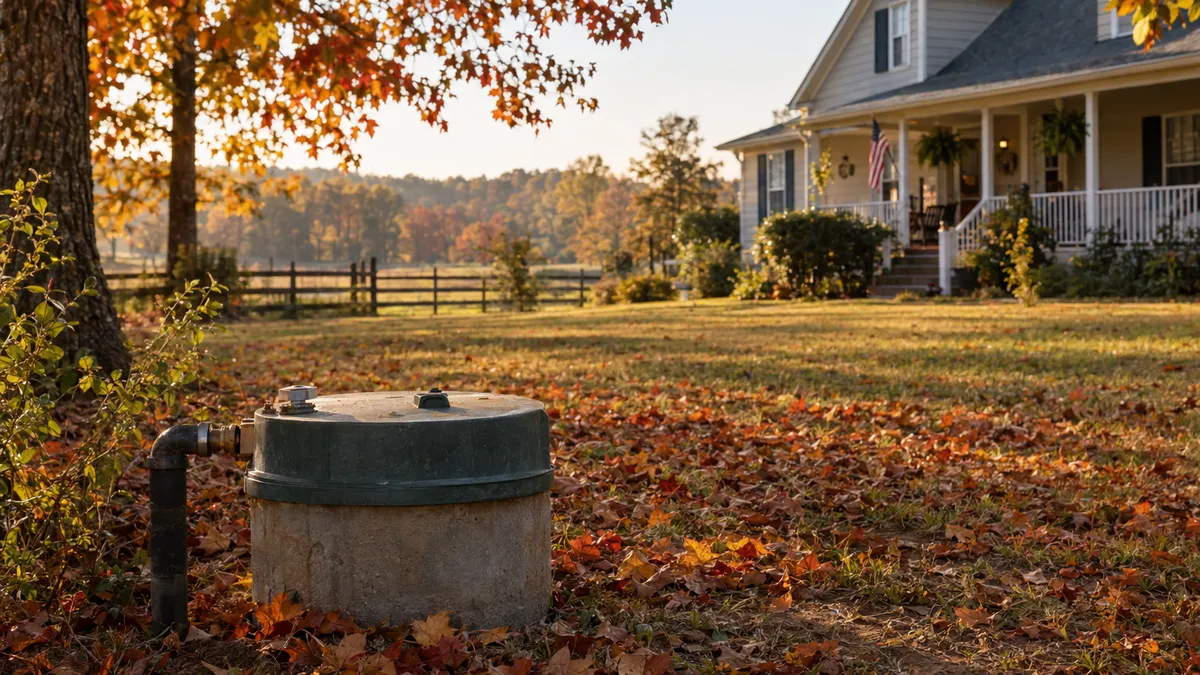
- Leaves or debris piled up around the wellhead (these hold moisture and can lead to contamination)
Foam pipe insulation sleeves are inexpensive and easy to install on exposed supply lines. If your pump house doesn't hold heat well, a small safe heat source can make the difference during a hard freeze. The key word is safe — any heat source near a pump house needs proper clearance from wiring and combustible materials.
Not sure what you're looking at? That's exactly what a service call is for. A technician can spot insulation gaps and cold-weather vulnerabilities that aren't obvious to the untrained eye.
✅ 4. Test Your Well Water
Well owners should test their water at least once a year — and if you haven't done it yet in 2026, fall is a good time to get it done. Testing before winter helps you catch any changes in water quality while they're still straightforward to address.
Pay attention if you notice any of these changes in your water:
- Rotten-egg smell — often indicates hydrogen sulfide or sulfur bacteria
- Orange or brown staining on sinks, tubs, or laundry — typically iron
- Metallic taste — can point to low pH or elevated metals
- Cloudy or sandy water — may signal a problem with the well screen or pump intake
- Sudden changes in taste or odor — always worth testing promptly
If your water looks, smells, or tastes different than it did six months ago, don't wait for an annual test. Schedule a water testing service call now.
✅ 5. Know Your Warning Signs So You Can Act Fast
Even a well-maintained system can throw a surprise. The best thing you can do as a homeowner is know the difference between something that can wait a few days and something that needs attention right now.
Call immediately if you see:
- No water at all — check the well breaker first; if it trips again or smells burnt, leave it off and call
- A burning smell, sparks, or smoke near the pump or electrical panel — leave the breaker off and call immediately
- The pump runs constantly with no sign of stopping
Schedule within 1–2 days if you notice:
- Rapid on/off clicking (short cycling)
- Sudden muddy or cloudy water — use bottled water for drinking until the system is checked
Schedule a standard service call for:
- Low or gradually weakening water pressure
- Air sputtering from faucets
- Mineral staining, off-taste, or odor changes
✅ 6. Think About Power Outages
Winter storms occasionally knock out power across the Upstate. No power means no pump — which means no water for drinking, cooking, or flushing. If you don't already have a backup power plan, fall is a good time to look into a generator sized to handle your pump's electrical draw. If you have one, test it before you need it and make sure it's fueled up.
✅ 7. Consider a Geothermal System Checkup
If your home uses a geothermal heating and cooling system with vertical loop wells, fall is also the right time to have the loop field pump and controls checked before winter's heating demands kick in. Geothermal systems are remarkably reliable, but like any mechanical system, catching small issues before the season changes is far easier than troubleshooting them mid-January.
Upstate SC Well Owners: What's Different Here
Wells in Greenville, Spartanburg, Anderson, Pickens, and Laurens counties are drilled through the clay and weathered rock typical of the Upstate Piedmont, then down into solid bedrock where water-bearing fractures provide the supply. That geology is generally favorable for well water, but it does mean depths — and what's in the water — can vary a lot from one property to the next.
Local knowledge matters when you're diagnosing a water quality issue or deciding whether a pump is pulling efficiently for its depth. This is one reason working with a well contractor who knows Upstate soil and bedrock conditions is worth more than a general service call from someone who doesn't.
Frequently Asked Questions
How often should I have my well inspected?
A professional inspection every one to three years is a reasonable baseline. If your system is older than 10 years, annual checkups are worth the investment. Always schedule one if you notice any change in water pressure, water quality, or pump behavior.
How deep are wells in the Upstate?
It varies by property. Most wells in the Upstate go through clay and weathered rock before hitting solid bedrock, and drilling continues until there's enough water flow to meet the home's needs. The exact depth isn't known until drilling — it depends on where water-bearing fractures appear in the bedrock at that specific location.
How long does it take to drill a new well?
Drilling a residential well typically takes one to two days. Installing the pump and connecting to the home adds additional time, and scheduling also depends on permits and weather. The permitting process is required for all new wells in South Carolina.
Do I need a permit for a new well in South Carolina?
Yes. New water wells in South Carolina require a permit before drilling begins. A licensed well driller handles the permitting process as part of the installation.
What should I do if I suddenly have no water?
First, check your well's circuit breaker. If it's tripped, reset it once. If it trips again, smells burnt, or sparks — leave it off and call a professional immediately. Don't keep resetting a breaker that trips repeatedly. If the breaker is fine but you still have no water, book a service call right away.
How often should I test my well water?
At least once a year. Test immediately any time you notice a change in taste, smell, or appearance — don't wait for the annual cycle.
Don't Wait for January to Find Out
The best well problems are the ones you catch in October, not the ones that find you at 7 a.m. on a cold weekday morning with no water and a full house. A quick fall inspection gives you peace of mind through the winter and usually costs a fraction of what an emergency repair runs.
Kellett's Well Boring Inc. has been drilling and servicing wells across Upstate South Carolina for over 40 years. We're a local, family-owned company — not a franchise or a call center — and we handle the whole system: drilling, pumps, pressure tanks, and water quality. If your well is due for a checkup or you've noticed something that doesn't seem right, give us a call.
📞 Local: 864-243-3388 | Toll-Free: 1-800-524-1228
📍 Serving Simpsonville, Greenville, Travelers Rest, Greer, Fountain Inn, Easley, Spartanburg, and the surrounding Upstate
🕐 Mon–Thu: 8am–6pm | Fri: 8am–12pm
Reach out online at kellettswellboring.com or give us a call to schedule your fall well inspection today.
