7 Signs Your Well Pump Is Failing (And What to Do Before You Lose Water)
7 Signs Your Well Pump Is Failing (And What to Do Before You Lose Water)
Your well pump does one job: move water from the ground into your home. It does it quietly, around the clock, every time someone turns on a faucet, flushes a toilet, or runs the dishwasher. Most homeowners never think about it — until the morning they turn on the tap and nothing comes out.
Here in Upstate South Carolina, we see a lot of that. And almost every time, there were warning signs weeks or months earlier that got ignored because they seemed minor. A little less pressure here. A funny noise there. A breaker that tripped once and never tripped again.
This post walks you through the seven most common signs that your well pump is on its way out — so you can call for service before you're left dry instead of after.
Why Well Pumps Fail
Most residential wells in the Upstate use a submersible pump — a sealed motor and impeller unit that sits down in the well casing, submerged in water. These pumps are built to last, but they work hard. Motor windings wear out. Bearings degrade. Impellers get eroded by sand and sediment in the water. The average submersible pump lasts somewhere between 10 and 25 years depending on depth, water quality, usage, and whether small problems got fixed early or ignored until they became big ones.
The good news: a failing pump rarely goes silent without some kind of warning. You just have to know what to listen for.
7 Warning Signs Your Well Pump May Be Failing
1. No Water at All
This is the obvious one — and the most urgent. If you turn on any faucet in the house and get nothing, the first thing to check is the well's circuit breaker. Find the breaker labeled "well pump" in your electrical panel. If it's tripped, reset it once. If water comes back and stays, the breaker may have tripped due to a power surge. If it trips again, or if you smell burning, see sparks, or hear a humming with no water — leave that breaker off and call us. Do not keep resetting it. A motor pulling too much current is either burned out or fighting a mechanical problem, and repeated resets can turn a repairable situation into a full pump replacement.
2. Low or Weak Water Pressure
This is the most commonly ignored warning sign. If your shower feels weaker than it used to, your garden hose trickles where it used to spray, or appliances that need good pressure (like your washing machine) take longer to fill — that's your pump telling you something. Low pressure can mean the pump motor is losing power, the impeller is wearing down, or the well itself is struggling to keep up with demand. It can also be a pressure tank issue (more on that below), but either way, it deserves a look.
3. Pump Clicking On and Off Rapidly (Short Cycling)
If you can hear your pump cycling on and off every few seconds — click, click, click — that's called short cycling, and it should not be ignored. The pump is supposed to run until the pressure tank reaches its shutoff pressure, then stop. If it's stopping and starting constantly, the pressure tank has likely lost its air charge and the bladder has failed. That means the pump is doing in a second what it should be doing in a minute or two.
Short cycling wears out pump motors fast. A pump that should last 15 more years can fail in months when it's short cycling hard. The fix is often a new pressure tank — a much simpler and less expensive job than a pump replacement — but only if you catch it in time.
4. Pump Runs Constantly and Won't Shut Off
The flip side of short cycling: a pump that never stops running. If your pump runs all the time even when no water is being used, it's struggling to build enough pressure to satisfy the pressure switch. This could mean the pump is wearing out and can no longer push water efficiently, there's a leak in the system pulling pressure down, or the pump has lost its prime. A constantly-running pump is also burning electricity around the clock — you'll see it in your electric bill before you see anything else.
5. Air Sputtering from Faucets
Turn on a faucet and get a burst of air followed by water — then more air — then water again? That's not normal. Air in the water lines usually means the pump is drawing air along with water, which happens when the water table has dropped temporarily (often after a drought or high-demand period) or when the pump intake has shifted. In any case, air in the system stresses the pump and can damage it if the condition continues.
6. Muddy, Sandy, or Cloudy Water
If your water suddenly looks muddy, has grit in it, or runs cloudy, the pump may be stirring up sediment from the bottom of the well — often a sign the pump has dropped in the casing, or that the screen that keeps sediment out is damaged. Beyond being unpleasant to use, sediment in the water line grinds away at the pump's impeller and can foul your pressure tank, water heater, and fixtures.
Pro tip: Any time your water changes color, smell, or taste, switch to bottled water for drinking until the system has been tested. Don't wait to see if it clears up on its own.
7. Tripping Breakers, High Electric Bills, or Unexplained Power Surges
A well pump that's working harder than it should draws more electricity. If your breaker trips once and resets fine, note it — and watch for it happening again. If your electric bill has crept up without a clear reason, and you haven't changed usage habits, the pump is worth investigating. Failing motors are inefficient motors. Catching this early can save you a significant amount compared to emergency service after a full failure.
What to Do When You Notice a Warning Sign
Here's the practical part. Most of these symptoms show up gradually, and there's a temptation to watch and wait. Try not to. Well pump repairs that catch a problem early are almost always less expensive and less disruptive than emergency service calls after a full failure. Here's what to do:
- Write down when you first noticed it. When did pressure drop? When did the clicking start? This helps the technician diagnose faster.
- Note how old your pump is. If you don't know, check your home inspection report, the installation paperwork, or call us — we can sometimes look it up by address.
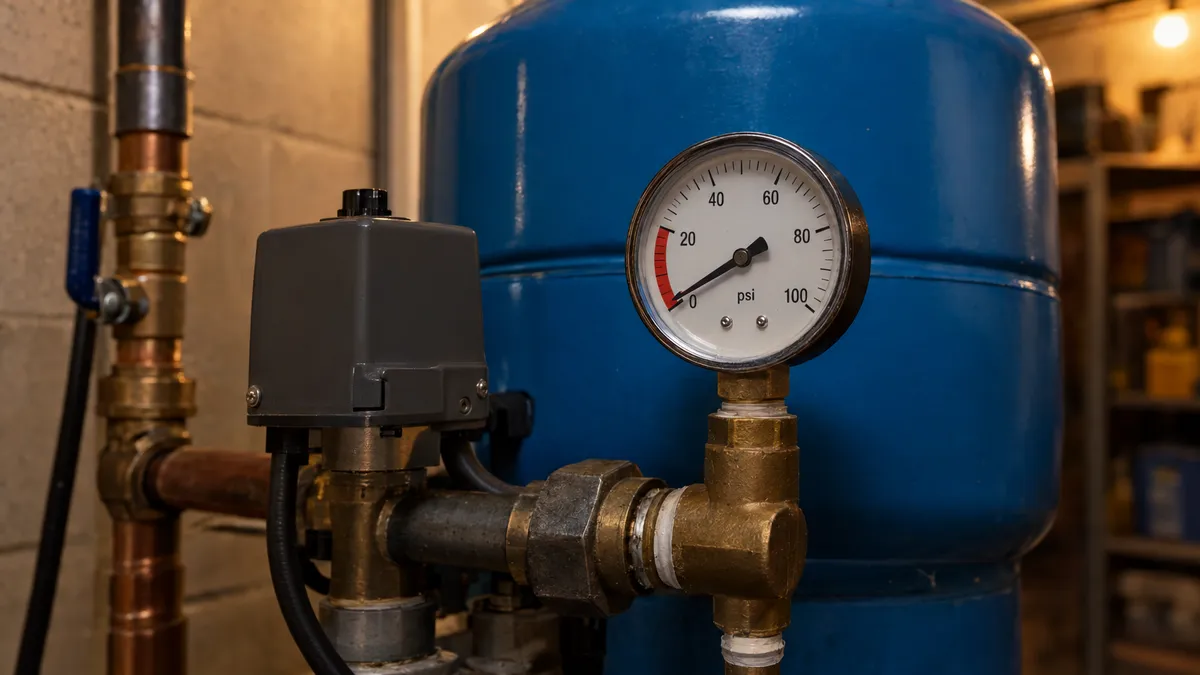
- Check the basics first. Flip the well breaker once for a no-water call. Check your pressure gauge if you have one on the tank (normal range is typically 40–60 PSI depending on your system settings).
- Do not pull the pump yourself. Submersible pumps are at the bottom of a casing that can be 200+ feet deep. This is a job for licensed drillers with the right equipment.
- Call for a service visit. A technician can diagnose the issue quickly, tell you whether you're looking at a repair or a replacement, and give you a straight answer on what it'll cost.
A Note on Freeze Season in the Upstate
October is a good time to think about your well system for another reason: winter is coming. Upstate South Carolina does get hard freezes — sometimes without much warning — and a pump or pressure tank that's already stressed doesn't handle the cold as well as one that's in good shape. If your pump house or tank enclosure isn't insulated, or if you've been putting off a service call, getting it done now means you're not scrambling when the temperature drops to 19 degrees at midnight.
A few simple freeze-prep steps: make sure your well house or pump enclosure has some insulation, know where your breaker is so you can cut power quickly if you need to, and if you lose water after a freeze, don't keep resetting the breaker — call us.
Frequently Asked Questions
How long does a well pump last?
Most submersible pumps last between 10 and 25 years. The wide range comes down to water quality (sandy or mineral-heavy water is harder on pumps), how often the system is maintained, and whether small problems were caught early. Pumps that short cycle for years without a fix tend to fail faster.
How much does well pump repair or replacement cost?
It depends on the depth of the well, the type of pump, and what's actually wrong. Some repairs — like a pressure switch or pressure tank — cost much less than a full pump pull and replacement. Kellett's quotes after a site visit and diagnosis, so you know exactly what you're looking at before any work starts.
Can I replace the pump myself?
Replacing a submersible pump requires pulling the drop pipe and pump from a well casing that may be hundreds of feet deep — this takes a drill rig or pump puller, not a ladder and a wrench. Electrical connections to a 240V circuit are also involved. This is one of those jobs where doing it wrong can make things much worse and more expensive. Leave it to a licensed well driller.
Should I test my well water at the same time?
Absolutely. Well owners should test their water at least once a year, and any time taste, smell, or color changes. If you're having a service call anyway, it's a natural time to collect a water sample. Rotten-egg smell, orange or brown staining, metallic taste — all of these are signs the water quality has shifted and should be looked at.
Do you serve my area?
Kellett's Well Boring serves homeowners and businesses across the Upstate — Greenville, Spartanburg, Anderson, Pickens, and Laurens counties, including Simpsonville, Fountain Inn, Greer, Travelers Rest, Taylors, Mauldin, Duncan, Easley, and the surrounding communities. If you're not sure, give us a call and we'll confirm.
Don't Wait Until You're Out of Water
A failing well pump rarely fails all at once. It gives you signals — pressure that drops a little, a noise that wasn't there before, a breaker that trips once. The homeowners who catch it early get a scheduled repair at a reasonable cost. The ones who wait get an emergency call on a Saturday morning with no water for the family, the livestock, or the business.
If any of the seven signs above sound familiar, it's worth a call. Kellett's Well Boring has been keeping Upstate water running for decades. We'll tell you straight what the problem is, what the fix costs, and how fast we can get there.
📞 Contact Kellett's Well Boring Inc.
3447 Fork Shoals Rd, Simpsonville, SC 29680
kellettswellboring.com
Licensed & insured. Serving Greenville, Spartanburg, Anderson, Pickens, and Laurens counties.
